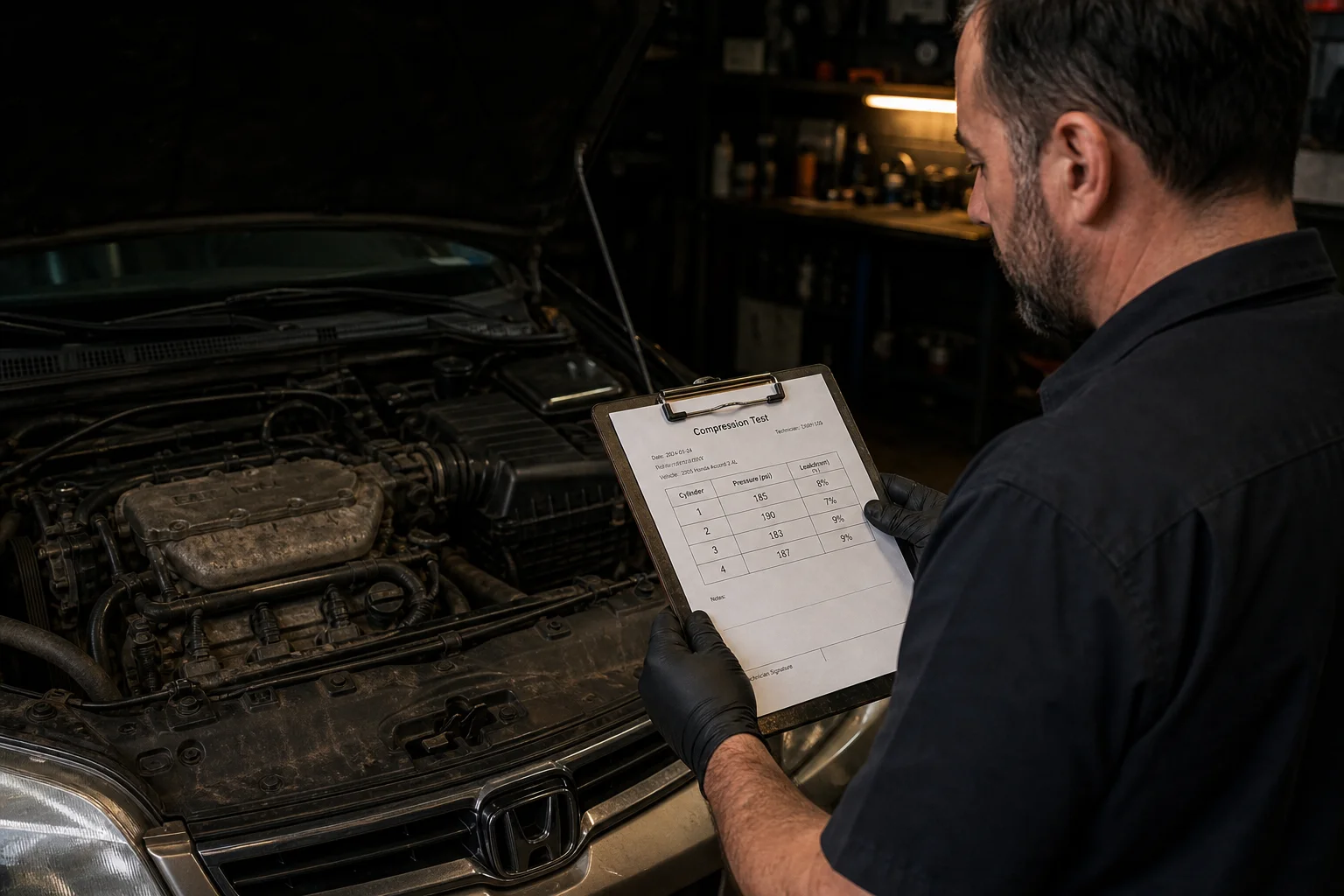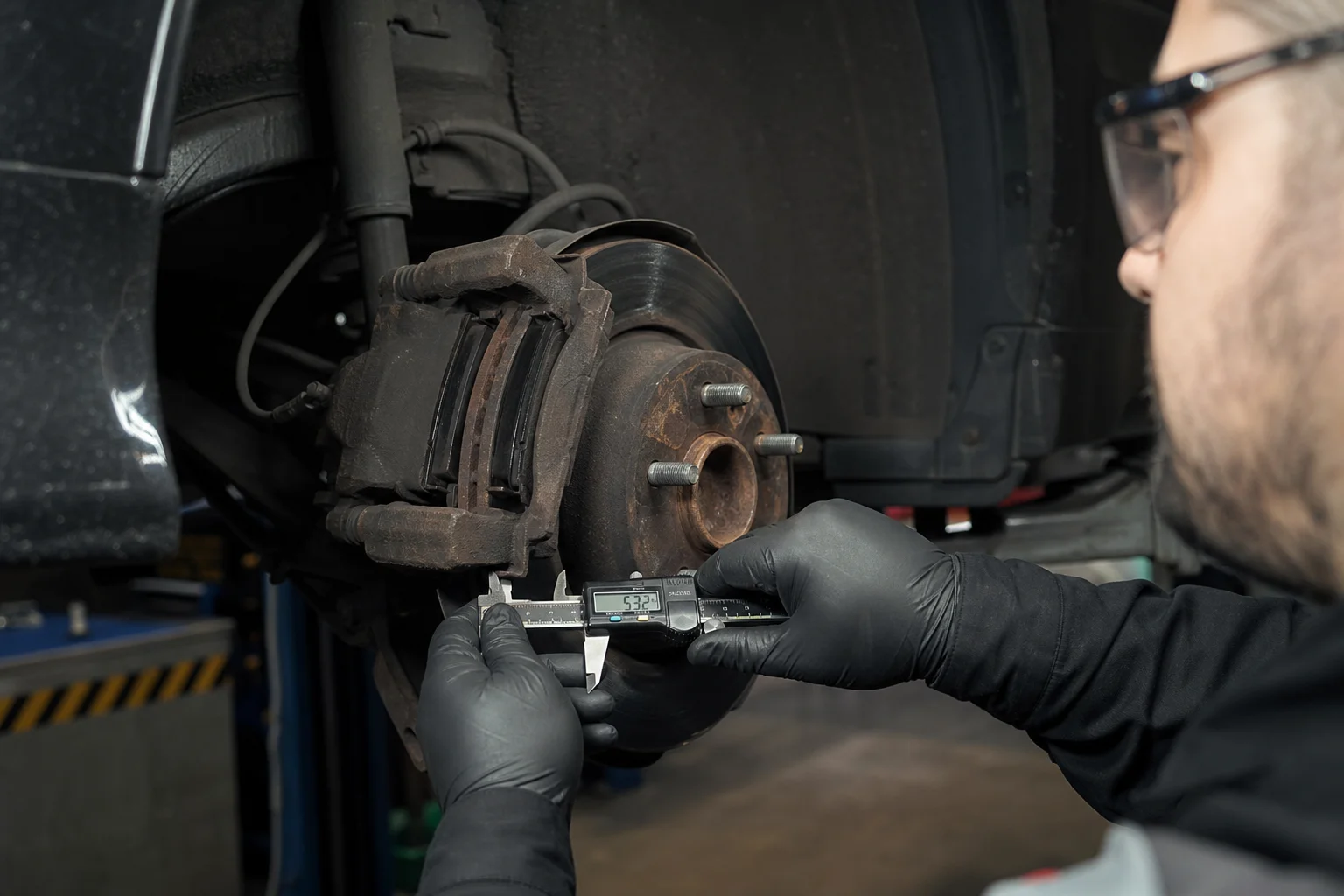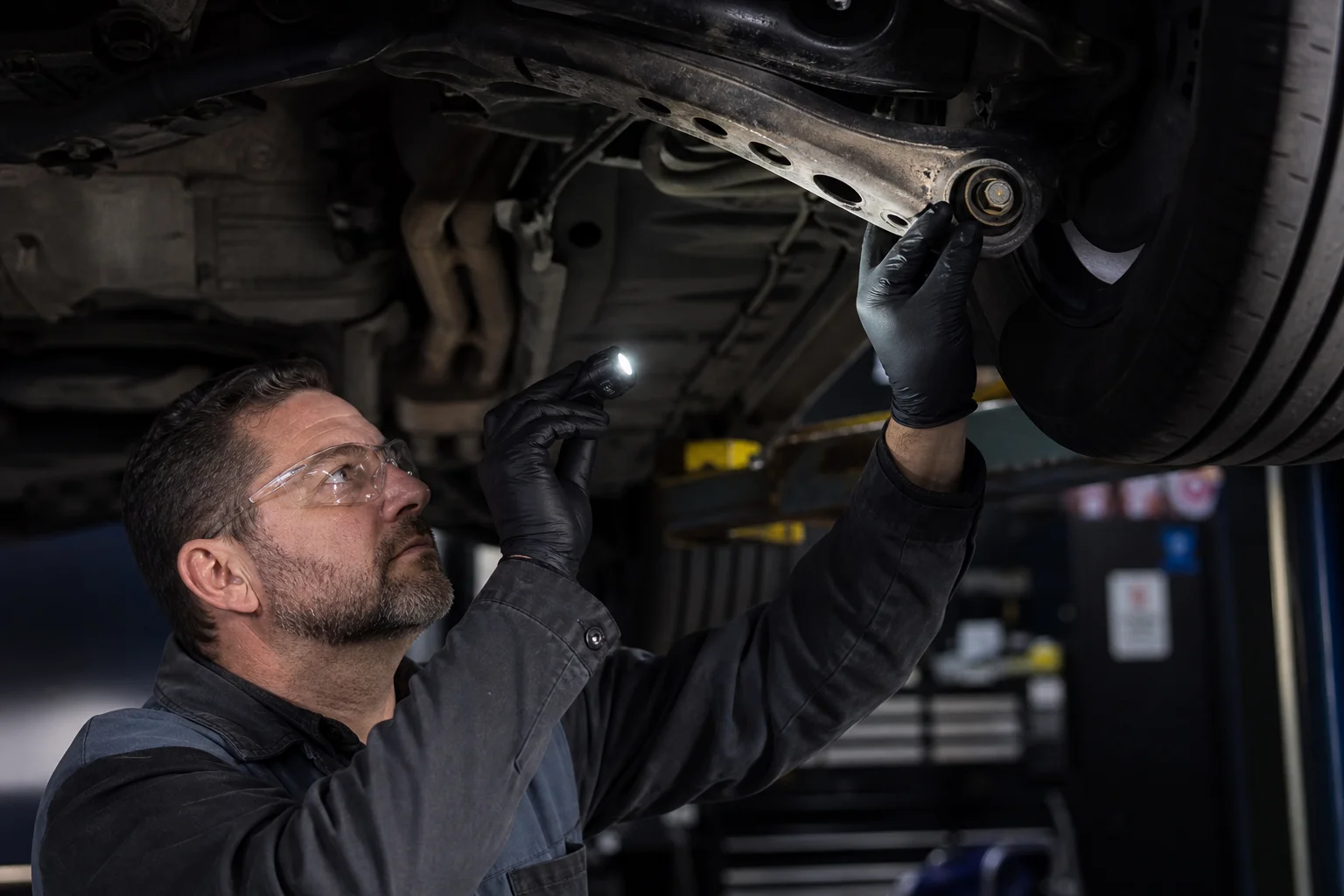
Educational guide to suspension inspection categories, bushing wear classes, and alignment report vocabulary for high-mileage vehicles.
Chassis wear and inspection documentation
Repeated road impacts accelerate bushing wear, damper fatigue, and joint play on high-mileage platforms. Inspection reports record categories that may differ from new-car assessments. Educational modules explain how to read these fields before seasonal service without assuming every notation requires immediate part replacement.
Aftermarket modifications and load history change reference geometry. Reports may include ride height measurements compared to baseline values — understanding measurement points prevents misreading altered configurations.
Shock absorber and damper report fields
Technicians document external leaks, mounting bushing condition, and rebound behavior during bounce tests.
- Leak observation: External fluid traces on damper body or seal area.
- Mount condition: Cracked rubber, torn isolators, or loose hardware at top and bottom mounts.
- Travel test notes: Observations during controlled compression and extension.
- Mileage since last replacement: Historical context when prior service records are available.
Bushings, ball joints, and steering linkage
Vibration and road noise accelerate bushing wear in control arms and stabilizer links. Reports may use movement categories — acceptable play, monitor, or recommend review — that require understanding of measurement method.
Tie rod and steering end play appears on alignment-related documents. Educational content separates alignment angle fields from mechanical wear observations.
Alignment and tire wear correlation
Uneven tire wear may appear alongside camber, caster, and toe fields on alignment printouts. Modules describe how wear pattern categories connect to suspension observations without directing specific correction packages.
Connecting suspension literacy to shop conversations
When scheduling service, owners who understand suspension vocabulary can ask: Were measurements compared to manufacturer specification? Which components were load-tested versus visual-only?
Educational materials emphasize that approving work is separate from understanding document meaning.
Summary
Suspension wear analysis education focuses on chassis report literacy, damper and bushing field definitions, and neutral planning vocabulary for high-mileage vehicle review.
Alignment printouts and chassis observations
Alignment reports list camber, caster, and toe angles alongside tire wear pattern categories. Modules on diastrophx.info explain how angle fields relate to suspension wear observations without directing specific correction packages — authorization remains with licensed staff.
Seasonal and load-history context
Vehicles used for towing, ride-share duty, or repeated urban curb impacts accumulate chassis wear differently. Inspection notes may reference load history when available. Understanding context fields prevents misreading a monitoring entry as an immediate replacement directive.
Safety-relevant chassis vocabulary
Steering linkage play, stabilizer link condition, and damper leak categories may appear on multi-point forms. Educational materials describe when observation classes warrant prompt licensed review versus scheduled documentation updates — always as information categories, not vehicle-specific conclusions.
Using diastrophx as reference before shop authorization
Educational modules on diastrophx.info describe documentation formats, glossary entries, and neutral planning vocabulary for high-mileage vehicle review. Content supports orientation and structured shop dialogue — it does not replace hands-on evaluation by a licensed repair facility or manufacturer service procedures.
When observations involve engine internals, transmission assemblies, steering, brakes, restraint systems, or high-voltage components, we recommend consulting a qualified workshop before authorizing service. diastrophx explains learning formats and information delivery; operational decisions remain your responsibility together with your chosen service provider.
For terminology questions about this article or related modules, use our contact form. The editorial team responds through a 24/7 message queue from our Chicago coordination office at One North Wacker Drive, Suite 2840, Office 2840, Chicago, IL 60606, United States.