How owners interpret engine inspection documents, compression logs, oil analysis fields, and leak observation categories before authorizing service on high-mileage vehicles.
Why engine documentation changes after extended operation
Vehicles beyond roughly 200,000 kilometers or 125,000 miles accumulate wear patterns that appear differently on shop reports than on low-mileage platforms. Educational modules on diastrophx.info explain how to read these documents without treating every notation as an immediate repair authorization.
High-cycle engines may show oil consumption observations, compression variance between cylinders, and leak seep categories that describe conditions at a point in time — not fixed outcomes for every vehicle of the same model year.
Owners benefit from separating three layers: manufacturer scheduled service intervals, observed conditions during inspection, and household maintenance priorities documented in a personal log format.
Common report fields for engine review
Licensed facilities often document engine checks in standardized sections. Neutral definitions help owners compare records across visits:
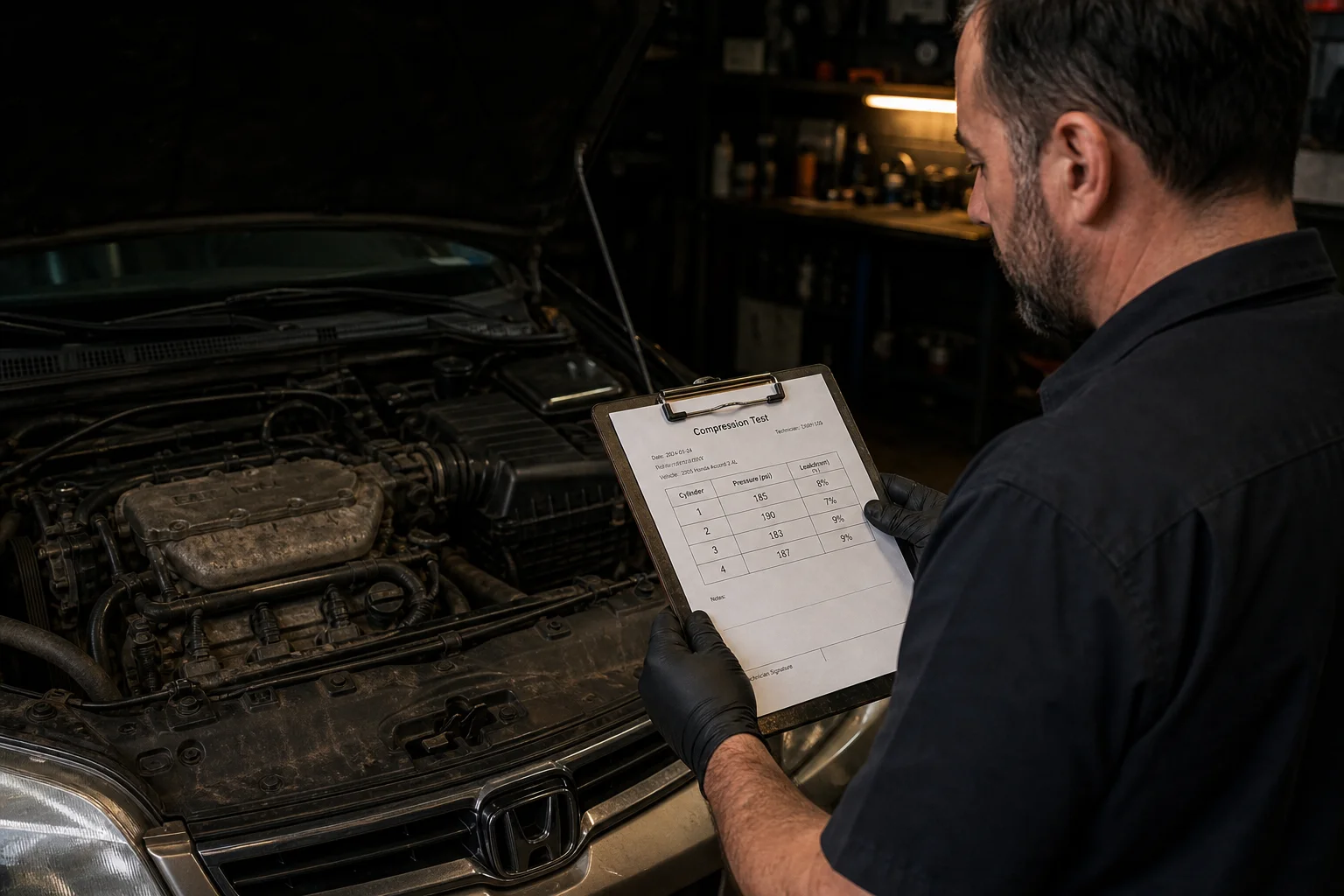
- Compression measurement: Recorded values per cylinder with cranking speed and battery voltage context.
- Oil analysis summary: Metal content categories, viscosity observations, and contamination notes when samples are taken.
- Leak observation class: Seep, drip, or active leak categories at gaskets, seals, and line connections.
- Timing chain or belt note: Visual or measurement fields where access allows without full disassembly.
- Scan tool readiness: Monitor status fields relevant to emissions and fuel trim context on aged platforms.
Oil consumption and internal wear vocabulary
Shop portals may record oil level drop between visits, blue smoke observations, and plug fouling categories. Educational content describes how these fields relate to measurement context — hot versus cold checks, interval length, and driving pattern notes.
Artificial intelligence summaries in some shop systems can condense dense engine reports into plain-language overviews. Our materials note that such summaries are study aids under human editorial review; primary technician documents remain authoritative.
Financial planning vocabulary in service documents
Maintenance planning modules define line item labels for diagnostic time, monitoring categories, and phased service entries. These describe document fields used in household planning spreadsheets — not predictions of future shop totals.
Questions to bring to a licensed facility
Which cylinders were tested and under what battery voltage? Was oil analysis performed or only visual inspection? Does the manufacturer bulletin apply to this engine code and model year?
Educational literacy supports clearer shop dialogue. Authorizing service remains a separate decision from understanding what the report fields mean.
Summary
Engine wear diagnostics education focuses on compression and oil analysis report literacy, leak observation categories, and neutral planning vocabulary. The learning format connects extended operation realities to documentation practices and explains where digital tools — including AI-assisted summaries — fit within human-reviewed editorial workflows.
Document literacy across multiple shop visits
When reviewing engine inspection reports over time, owners on diastrophx.info learn to align date stamps, mileage entries, and technician initials across visits. A compression log from one appointment may reference prior oil analysis results — educational modules explain how cross-referencing fields builds a neutral timeline without predicting future shop scope.
Household maintenance spreadsheets often mirror shop portal categories. Our reference format describes column headers such as observation class, measurement context, and follow-up monitoring — vocabulary for personal logs, not operational mandates.
Artificial intelligence in shop and editorial workflows
Some licensed facilities use automated summaries of dense engine reports. diastrophx.info notes that such summaries are orientation aids; primary technician entries remain authoritative. Editorial workflows on the portal may use similar drafting support under human verification — always labeled as educational reference.
Connecting symptoms to inspection categories
Rough idle, oil level changes between visits, and intermittent warning lamps may appear together on aged platforms. Modules separate symptom descriptions from inspection field names so owners can prepare focused questions: which cylinders were tested, under what cranking conditions, and whether oil samples were analyzed or only visually reviewed.
Using diastrophx as reference before shop authorization
Educational modules on diastrophx.info describe documentation formats, glossary entries, and neutral planning vocabulary for high-mileage vehicle review. Content supports orientation and structured shop dialogue — it does not replace hands-on evaluation by a licensed repair facility or manufacturer service procedures.
When observations involve engine internals, transmission assemblies, steering, brakes, restraint systems, or high-voltage components, we recommend consulting a qualified workshop before authorizing service. diastrophx explains learning formats and information delivery; operational decisions remain your responsibility together with your chosen service provider.
For terminology questions about this article or related modules, use our contact form. The editorial team responds through a 24/7 message queue from our Chicago coordination office at One North Wacker Drive, Suite 2840, Office 2840, Chicago, IL 60606, United States.