How to read brake inspection logs, pad thickness fields, rotor condition categories, and hydraulic line observations for aged vehicles.
Brake documentation on high-cycle vehicles
Brake components on extensively used vehicles show wear patterns documented in pad thickness logs, rotor scoring categories, and fluid condition notes. Educational content explains field names without directing specific parts brands or outcome claims.
Pad and rotor measurement fields
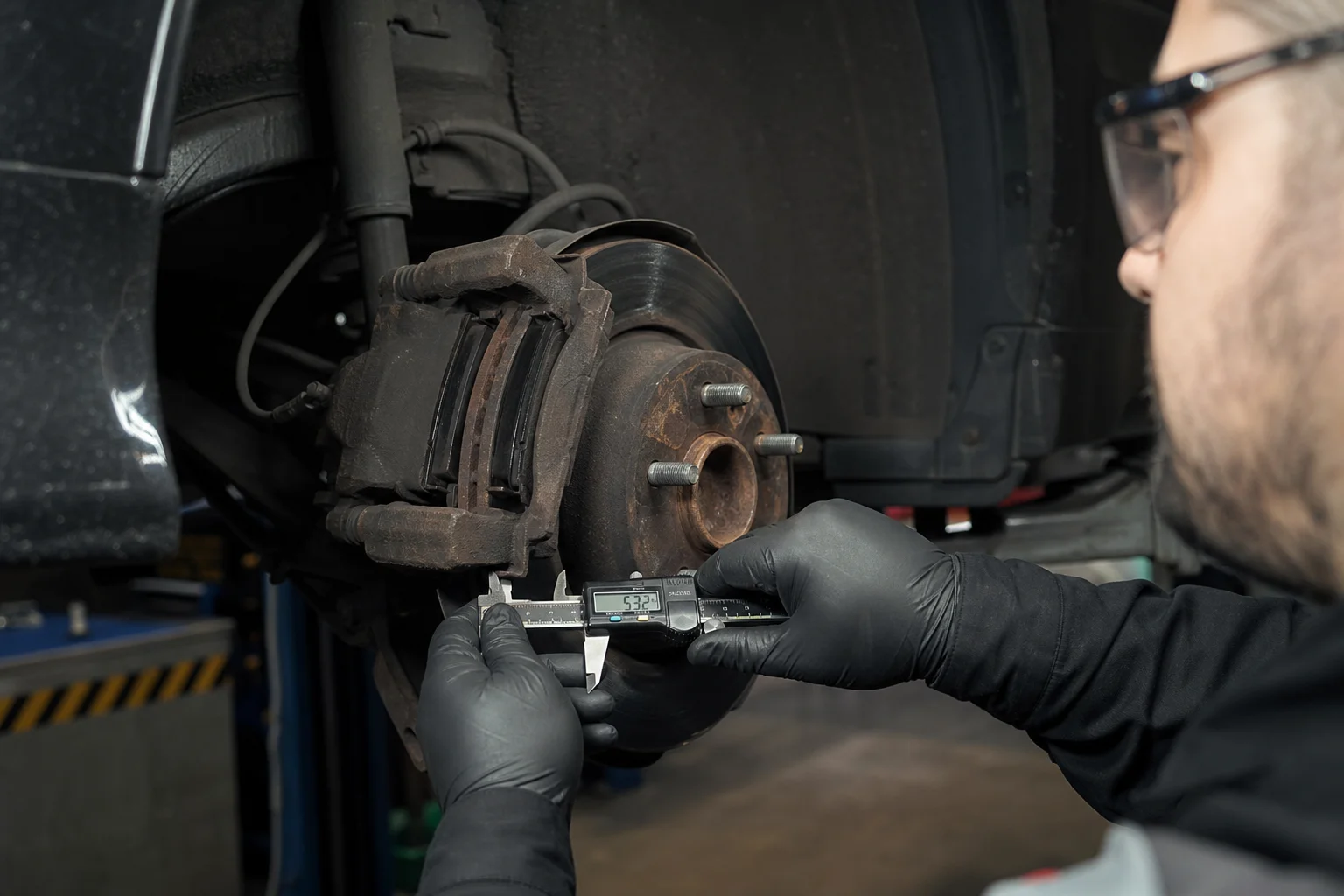
Technicians measure pad thickness at multiple points and record rotor minimum thickness where specifications exist.
- Pad thickness reading: Recorded in millimeters or inches at inner and outer edges per wheel.
- Rotor condition class: Scoring, lip formation, heat checking, or thickness below specification notes.
- Caliper slide observation: Binding, uneven pad wear, or hardware condition categories.
- Parking brake function: Hold test notes on cable or integrated electric park brake systems.
Hydraulic system and fluid vocabulary
Brake fluid moisture content, pedal feel observations, and line corrosion categories appear on safety-focused inspection forms. Modules define these fields as observation classes requiring licensed evaluation when safety relevance is noted.
ABS and electronic brake assist fields
Scan tool readouts may document wheel speed sensor plausibility, ABS activation history, and stability control observation fields. Educational modules define code categories without directing specific component replacement.
Financial planning vocabulary in brake service documents
Household maintenance logs may include line items for phased brake service entries. Educational modules define these labels as document fields — not predictions of future shop totals.
Summary
Brake system mileage check education focuses on pad and rotor report literacy, hydraulic observation categories, and neutral safety review vocabulary for high-mileage platforms.
Hydraulic and electronic brake fields together
Modern brake inspection documents combine pad thickness logs, rotor scoring classes, fluid moisture notes, and ABS-related scan fields. diastrophx modules define each category so owners read comprehensive safety reports with clearer vocabulary before shop authorization.
Household planning for brake service documents
Personal maintenance logs may track pad thickness readings visit-to-visit, rotor minimum thickness notes, and fluid exchange mileage. Educational content describes these as neutral document fields for household spreadsheets — separate from shop quoting or part brand selection.
When to seek licensed review promptly
Active warning lamps, pedal feel changes, or fluid contamination observations documented on inspection forms may warrant immediate professional review. Modules describe these as safety-relevant observation classes — not remote diagnoses for any specific vehicle on diastrophx.info.
Using diastrophx as reference before shop authorization
Educational modules on diastrophx.info describe documentation formats, glossary entries, and neutral planning vocabulary for high-mileage vehicle review. Content supports orientation and structured shop dialogue — it does not replace hands-on evaluation by a licensed repair facility or manufacturer service procedures.
When observations involve engine internals, transmission assemblies, steering, brakes, restraint systems, or high-voltage components, we recommend consulting a qualified workshop before authorizing service. diastrophx explains learning formats and information delivery; operational decisions remain your responsibility together with your chosen service provider.
For terminology questions about this article or related modules, use our contact form. The editorial team responds through a 24/7 message queue from our Chicago coordination office at One North Wacker Drive, Suite 2840, Office 2840, Chicago, IL 60606, United States.